
28 Best Collagen supplements
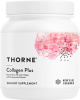
- Collagen formula for radiant skin
- Supplemented with nicotinamide riboside, HydroPeach™ peach extract, MitoHeal® berry complex and TMG
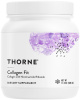
- Collagen formula for athletes
- With nicotinamide riboside and TMG

- Patented, well-researched Ovoderm® collagen
- Vegetarian collagen type I, V and X
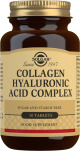
- Contains BioCell Collagen II™
- Contains 120 mg hyaluronic acid per daily dose
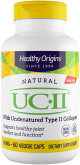
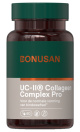
- Patented, standardized UC-II® collagen
- Type II collagen - undenatured
- Formula for the joints
- Contains Type II collagen, botanicals, green-lipped mussel, vitamin D and minerals

- Contains pure fish collagen powder
- Supplemented with natural vitamin C from acerola powder

- Contains pure fish collagen powder
- Neutral in taste

- Formula for the skin
- Supplemented with patented SunMatcha® powder from Japan

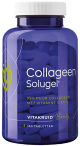
- Contains patented collagen peptides (Solugel®)
- Completed with vitamin C and D3

- Contains patented collagen peptides (Solugel®)
- Completed with vitamin C and D3
- Contains patented collagen peptides (Solugel®)
- In convenient tablet form

- Formula for the skin
- Contains patented collagen peptides (Solugel®)

- Collagen extracted from Norwegian cod caught in the wild
- With vitamin C and zinc for optimal action
- Patented bovine collagen (VERISOL®)
- Collagen can reduce the visibility of wrinkles*2
- Contains sprouts, vegetables, algae, fruits and herbs
- Contains pure fish collagen powder
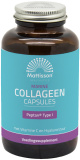
- Contains Peptan® Fish Collagen Peptides Type I
- Supported with vitamin C and hyaluronic acid
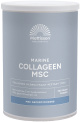
- Contains MSC certified Fish Collagen Peptan® type I
- Supported with vitamin C and hyaluronic acid
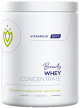
- Collagen and whey protein in 1 product
- Very complete amino acid profile

- Type I collagen from fish
- Pure hydrolyzed collagen peptides
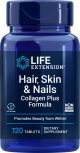
- Formula for skin, hair and nails
- Contains collagen, keratin, silicon, vitamins and minerals

- Contains patented collagen peptides (Solugel®)
- In handy sachets, easy for on the road
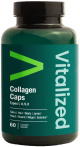
- Collagen from fish and eggshells
- Combines collagen type I, II, V & X
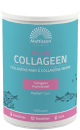
- Contains Peptan® Fish Collagen Peptides Type I
- Without added sugars, preservatives, colors and flavors
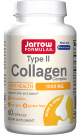
- Contains BioCell Collagen II™
- 500 mg per capsule
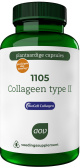
- Contains BioCell Collagen II™
- Containing chondroitin and hyaluronic acid

- Formula for the skin
- Contains patented collagen peptides (Solugel®)

- Formula for the skin
- A combination of collagen, hyaluronic acid, OPC, vitamin C, zinc, and copper
Buy the best Collagen powder or pills here.
Or read more about it below.
Collagen Powder Supplements
Collagen powder is often better to use than capsules or tablets because it makes it easier to consume sufficient collagen.
Here you will find 15 high-quality collagen powder supplements, including both pure collagen and a mix of collagen with other substances that have a beneficial effect on skin and connective tissue.
What is collagen?
Collagen is a structural protein that forms strong fibers in connective tissue. The body uses collagen to give shape, strength, and stability to skin, bones, tendons, cartilage, and blood vessels. Its basic structure is a triple helix made from three protein chains.
Types of Collagen
There are more than 15 types of collagen, most tissues and organs contain different types of collagen. Collagen, by definition, is an animal product. It is obtained from the tendons, bones, skins, connective tissues and cartilage of animals such as cattle, pigs, chickens (eggshells) and fish.
Also, it is obtained from the tendons, bones, skins, connective tissues and cartilage of animals such as cattle, pigs, chickens (eggshells) and fish.
More than 90% of the collagen in the body is type I collagen: tendons, ligaments, joint capsule, synovial membrane, muscles, blood vessels and bone tissue.
- Type I, III, V and XI are found in almost all types of connective tissue
- Tendons contain only type I
- Skin contains type I and type III
- Cartilage contains mostly type II, in addition small amounts of collagen type IX, X and XI
- Tissues that are engaged in wound repair type III
Bovine collagen consists mainly of type I and type III collagen. Viscollagen and eggshell membrane from mainly type I collagen. In addition, fish collagen is rich in hydroxyproline. An amino acid that forms an important part of the skin, the walls of blood vessels and other connective tissues.
How much collagen per day?
Most studies use a daily intake between 5 and 15 grams of collagen peptides. A common target is 10 grams per day. This amount dissolves well, digests easily, and provides enough of the important amino acids.
Collagen tablets, capsules, and powder?
Collagen tablets, capsules, and powder all deliver hydrolyzed collagen peptides. The forms differ in dose size, convenience, and ease of use. Tablets and capsules provide fixed portions but hold small amounts, while powder allows higher daily doses in one serving and mixes into drinks or food.
Comparison of the three forms
| Form | Main point |
|---|---|
| Tablets | Fixed dose but usually low collagen content per tablet. |
| Capsules | Easy to take but require multiple capsules for a full daily dose. |
| Powder | Allows higher doses in a single portion and mixes into drinks. |
Patented Collagen
Patented collagen, backed by research with high quality ingredients.
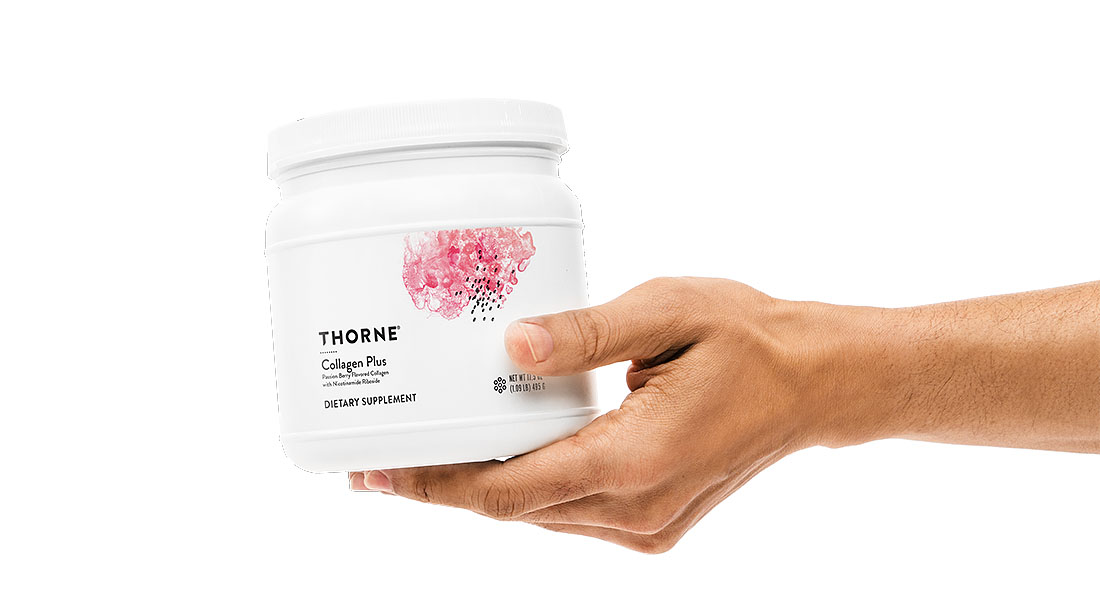
 Thorne uses PeptPure® bioactive collagen peptides Type I & III. PeptPure is produced directly from fresh, grass-fed beef hides into fully hydrolyzed collagen powder.PeptPure has in-house manufacturing through to the final product. PeptPure is guaranteed to meet the highest quality standards, is fully traceable and has sustainable sources.
 UC-II® is a registered trademark of Interhealth for joints. Healthy Origins, Bonusan and Vitals use it. The efficacy of UC-II® undenatured type II collagen, at a low dose (only 40 mg) once daily, has been demonstrated in several well-controlled clinical trials.
 BioCell Technology, the provider of BioCell Collagen, has invested in nearly two decades of clinical trials and research and development activities. BioCell Technology is a pioneer in the applications of low molecular weight hydrolyzed collagen type II. BioCell collagen is made from pure chicken breastbone cartilage that is free of hormones and antibiotics. BioCell Collagen® targets joint health.
When to take collagen?
You can take collagen at any time of the day. The body absorbs collagen peptides in the same way whether you take them in the morning, afternoon, or evening. Many people take collagen with a meal because the stomach acid and digestive enzymes support the breakdown and absorption of the peptides.
Undenatured and hydrolyzed collagen
Undenatured collagen is collagen in its original form with the spatial (spiral) structure.
Hydrolyzed collagen is peptides and is also called denatured collagen. Here the original molecules have been reduced to smaller particles.
Which collagen is best?
Hydrolyzed collagen peptides are the best form because the protein is broken into small chains that the body absorbs efficiently. The peptide form itself matters more than the specific type.
What are collagen supplements made of?
Collagen supplements are made from animal connective tissue. Manufacturers extract collagen from bovine hides, fish skin, chicken cartilage, or pork skin. The collagen is 'broken' into small collagen peptides so the powder dissolves easily and absorbs well.
Does collagen have side effects?
Collagen is generally well tolerated. Mild side effects can include a feeling of fullness, a slight stomach upset, or a change in stool texture. People with allergies to fish, eggshell membrane, or specific animal sources may respond negatively if the supplement is made from that source. Very high doses can cause digestive discomfort in some users, but this is uncommon.
Essential cofactors in Collagen Synthesis
Collagen is produced in the body by combining amino acids. To make collagen, the body requires the following substances:
- Hydroxyproline is an important component of the protein collagen. The formation of hydroxyproline requires the amino acid proline and vitamin C.
- Proline: present in protein, dairy, cabbage, mushrooms and asparagus, among others.
- Glycine: present in pig skin, chicken skin and gelatin, and a variety of other protein-rich foods, among others.
- Vitamin C:: present, among other things, in citrus fruits and bell peppers.
- Zinc: present in beef, lamb, pork, seafood, chickpeas, lentils, beans, milk, cheese and various nuts and seeds, among others.
- Copper: present in organ meats, cocoa powder, cashews, sesame seeds and lentils, among others.
- Glycosaminoglycans: building blocks for collagen-containing tissues such as cartilage, bones and intervertebral discs. Among others present in Green-lipped mussel.
Collagen is even more effective when combined with vitamin C, glucosamine and hyaluronic acid.
Which foods contain collagen?
Foods that naturally contain collagen
- Chicken skin and connective tissue
- Beef cuts with connective tissue, such as shank or brisket
- Pork skin and slow-cooked pork dishes
- Fish skin
- Bone broth made from simmered bones and cartilage
Written by: Wouter Olthof
Reviewed by: Liesbeth Thoen
Updated on: 11 November 2025