
Plant proteins vs. animal proteins

What do you choose: plant-based or animal-based?
Proteins, Proteins, Proteins. It is a topic that occupies many people, as high-protein diets become increasingly popular and (social) media and shops are full of them.
Whether you are a (top) athlete or an average consumer, protein is a macronutrient that everyone simply needs on a daily basis.
However, especially when you are consciously monitoring your protein intake, the question of whether to choose proteins from animal or plant sources will soon arise.
In this article, we will discuss the differences and help you decide which protein source best fits your daily protein requirements.
What is protein?
To compare animal and plant proteins, we must first go back to the basics: what actually is protein?
Protein is one of the three macronutrients we need, alongside carbohydrates and fats. It provides essential building blocks called amino acids, which contribute to the construction of body tissues such as muscles, bones, and skin.
In addition, proteins play a role in functional compounds in the body, such as enzymes, hormones, antibodies in the immune system, and chemical messengers like neurotransmitters. And we are talking about vast numbers: our body contains more than 10,000 different proteins, and furthermore, it is different for everyone. Proteins are therefore an indispensable ingredient for the daily functioning of your body.
Where do we get protein from?
Proteins occur in many foods. Traditionally, we think of eggs, meat, and poultry as high-protein foods, but proteins are also found in dairy products such as yogurt and cheese, as well as in plant-based products like whole grains, beans, seeds, peanut butter, tofu, or tempeh.
The table below provides an overview of protein sources. How many of these protein sources end up on your plate?
|
Animal Proteins |
Plant-based Proteins |
|
Meat (beef, pork, lamb, veal) |
Beans (kidney beans, soybeans, black beans) |
|
Poultry (chicken, turkey, duck) |
Lentils (brown, green, red lentils) |
|
Fish (salmon, tuna, sardines) |
Peas (chickpeas, black-eyed peas, split peas) |
|
Shellfish and crustaceans (oysters, crab, shrimp, scallops) |
Nuts (walnuts, almonds, peanuts) |
|
Eggs (chicken, duck, quail) |
Seeds (chia seeds, flaxseeds, sunflower seeds) |
|
Milk (cow, goat, sheep) |
Whole grains (quinoa, oats, teff, buckwheat) |
|
Dairy products (cheese, yogurt, quark) |
Soy products (soy milk, tofu, tempeh, textured vegetable protein) |
|
Processed meat (sausage, bacon, ham) |
Vegetables (spirulina, broccoli, asparagus) |
How much protein do we need?
As with many nutrients, the question is often whether you are getting enough. The answer depends partly on your individual needs. Factors such as age, weight, height, activity level, and whether you are in a stressful phase (for example, during pregnancy or breastfeeding) all influence your protein requirement.
Generally, the recommended protein intake for adults is between 10-35% of daily calorie intake. For an average adult consuming 2,000 calories a day, this amounts to 50-175 grams of protein per day. That is quite a wide margin.
Another guideline is the Recommended Dietary Allowance (RDA), which advises 0.8 grams of protein per kilogram of body weight per day. An adult weighing 75 kilograms who exercises little therefore needs about 62 grams of protein per day. However, the RDA is only a guideline for the minimum amount needed to meet basic needs.
Recent research suggests that an increased intake of 1.0-1.6 grams of protein per kilogram of body weight may be better for maintaining muscle mass and improving health. This is particularly important for the elderly who are at risk of losing muscle mass and strength (sarcopenia) and for people who want to lose weight consciously, for example with the GLP-1 protocol.
Animal vs. Plant-based Proteins
Nutritional differences between plant and animal proteins – Animal proteins contain all nine essential amino acids that the body cannot produce itself, making them 'complete' proteins. Some plant proteins lack one or more of these amino acids, making them 'incomplete'. This might sound like a disadvantage, but by combining different incomplete protein sources, they can compensate for each other's deficiencies. For example, rice and beans are incomplete proteins separately, but together they form a complete protein profile.
Additionally, we must look at the other nutrients that protein sources provide. Meat such as beef, chicken, and pork often contains more saturated fat, which can increase the risk of cardiovascular disease. On the other hand, they contain important micronutrients such as iron and vitamin B12, which are essential for healthy red blood cells. Fish and shellfish also provide healthy omega-3 fatty acids.
Plant-based proteins, such as beans and whole grains, are packed with fiber, B vitamins, and other phytonutrients such as antioxidants, making them a nutrient-rich choice. However, plant-based protein products can also be highly processed, with additives such as preservatives, binders, and extra fats to mimic the taste and texture of meat. It is therefore also important with plant-based protein sources to look critically at the label and make informed choices.
Both American and European Dietary Guidelines recommend using a variety of protein sources, with an emphasis on more fish, shellfish, and plant-based proteins. While not everyone needs to become a vegan, fiber-rich plants and healthy fat sources offer health benefits that are valuable for everyone.
Environmental impact of plant-based vs. animal proteins – Another important perspective when choosing protein sources is their impact on the environment. Food production burdens the planet's natural resources, and agriculture is a major cause of deforestation, freshwater use and pollution, and climate change. The environmental effects of food are often measured by their greenhouse gas emissions, and plant and animal sources differ greatly in their emissions.
The graph below from the World Resources Institute shows that the production of animal proteins consumes a disproportionate amount of natural resources and causes more emissions than the cultivation of plant-based protein sources. For instance, beef requires about seven times as much fresh water and nearly twenty times as much land as the production of legumes (beans, peas, lentils, etc.).
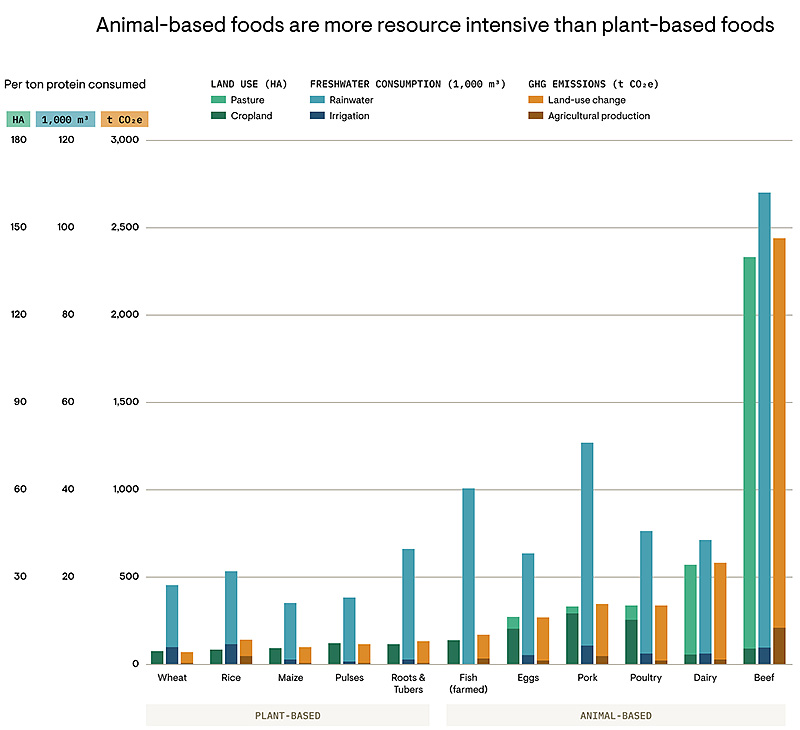
Since we only have one planet, it is important to think about the impact of food production and our role as consumers on the health of the earth, now and for future generations.
Conclusion
Whether you follow a strict plant-based diet or occasionally enjoy a juicy steak, it is good to think about the proteins on your plate and how your choices align with your general needs and health goals.
Smeets & Graas offers a wide choice of supplements that meet your protein needs, regardless of your dietary preferences.
Currently, we have approximately 25 protein supplements, all in powder form. Half of them are of plant origin, the other half animal-based. Some of the products contain only proteins, but there are various products with all kinds of additions, such as enzymes, herbs, vitamins, minerals, probiotics, and fatty acids. You can easily make a choice using the filter.
This blog article is a translation and adaptation of a Take 5 Daily article on Thorne.com
Thorne Author: Carly Duffy, MPH, RD
Dutch Editorial: Peter Smeets
Published on: January 28, 2026