
The Vaginal Microbiome: What Is It and Why Is It Important?
The Vaginal Microbiome
The vaginal microbiome consists of bacteria and other microorganisms that live in the vagina. In women of reproductive age, a healthy vaginal microbiome is typically dominated by Lactobacillus bacteria. These bacteria produce lactic acid, helping to maintain an acidic vaginal environment and making it more difficult for certain undesirable microorganisms to multiply.
The composition of the vaginal microbiome changes in response to factors including hormones, menstruation, pregnancy, menopause and certain lifestyle factors. The use of antibiotics and vaginal douching can also play a role.
Is the Vaginal Microbiome Different from the Gut Microbiome?
The vaginal microbiome is generally less well known than the gut microbiome. The importance of the gut microbiome—the vast community of microorganisms living in our intestines—for human health is now widely recognised.
Microorganisms also live in the vagina. Unlike the gut microbiome, which generally benefits from a high diversity of beneficial microorganisms, the vaginal microbiome is often considered healthiest when it is less diverse and dominated by beneficial Lactobacillus strains.
The composition of the vaginal microbiome is generally related to the microbial communities found in the urinary tract. It can also be influenced by microorganisms originating from the gut microbiome, whether beneficial or potentially harmful.
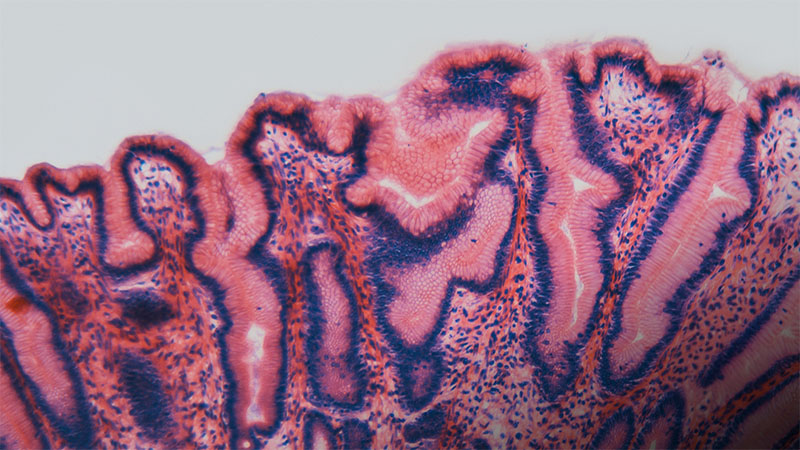
What Are Beneficial Vaginal Bacteria and How Do They Work?
Lactobacillus bacteria play an important role in maintaining a healthy vaginal microbiome in many women.
- They produce lactic acid: This helps maintain a vaginal pH within the acidic range of 3.8 to 4.5, which can help prevent certain pathogens that thrive in less acidic environments from multiplying.
- They compete for attachment sites: By adhering to the vaginal mucosa, they can help limit the ability of potentially harmful bacteria or yeasts to attach.
- Some species produce hydrogen peroxide: This may help inhibit certain potentially harmful bacteria or yeasts.1
The following species are found in the vagina:
Lactobacillus acidophilus, Lacticaseibacillus reuteri, Lactiplantibacillus plantarum, Lactobacillus rhamnosus, Lactobacillus crispatus, Lactobacillus gasseri and Lactobacillus jensenii.
You may also encounter the term Lacticaseibacillus, which was previously included under the genus Lactobacillus. In 2020, several bacterial species were reassigned to new genera, including Lacticaseibacillus. As a result, the old and new scientific names are sometimes used interchangeably. The same applies to Lactiplantibacillus.
What Can Disrupt Beneficial Vaginal Bacteria?
The vaginal microbiome can change in response to antibiotics, stress, diet, vaginal douching and other factors. Some of these factors are within our control, while others are not.
Diet
A diet high in sugar has long been associated with an increased risk of vaginal yeast infections, for example those caused by Candida. Studies have also identified associations between carbohydrate-rich dietary patterns and vaginal bacterial infections.
A 2022 case-control study investigated the relationship between dietary patterns and bacterial vaginosis. The researchers found associations between certain dietary patterns and the risk of bacterial vaginosis. However, this type of study demonstrates an association rather than proving that diet causes the condition.2
Stress
Stress may disrupt the normal vaginal flora by influencing vaginal pH.3 Elevated concentrations of the stress hormone cortisol have also been shown to affect the normal metabolic balance in the vagina.4
Vaginal Douching
Vaginal douching with various antimicrobial solutions can significantly disrupt the vaginal flora. One study found that different douching products destroyed not only harmful bacteria but also beneficial Lactobacillus bacteria.5
Antibiotics
Although antibiotics are commonly used to treat bacterial vaginosis, recent antibiotic use can also be a risk factor for vaginal yeast infections and disturbances of the vaginal microbiome.6
Other Factors
Other factors that may disrupt the vaginal microbial balance and potentially increase the risk of infections include intrauterine devices (IUDs), smoking and having multiple sexual partners.6
How Do Different Stages of Life Affect the Vaginal Microbiome?
Hormonal changes during puberty, menstruation, pregnancy and menopause influence the composition of the vaginal microbiome.
Reproductive Years
Oestrogen plays an important role in maintaining a healthy vaginal microbiome. Among other things, it influences glycogen levels in the vaginal mucosa, vaginal acidity (pH) and the composition of the resident bacteria. As girls enter puberty, the number of Lactobacillus bacteria in the vagina therefore tends to increase.
Menstruation
Although Lactobacillus bacteria generally thrive during the reproductive years, menstruation itself can temporarily disrupt the vaginal microbial balance. This may be related to fluctuations in oestrogen and progesterone, tampon use and the presence of menstrual blood.
Pregnancy
During pregnancy, oestrogen levels gradually increase and reach a peak around week 32, in the third trimester. As a result, Lactobacillus bacteria are generally abundant.
Other metabolic changes also play a role. Increased glycogen levels, together with higher oestrogen concentrations, may contribute to an increased risk of vaginal candidiasis, particularly during the second trimester.
Towards the end of pregnancy and during the postpartum period, oestrogen levels fall again, and the vaginal microbiome generally becomes more diverse.7
Menopause
During menopause, the number of Lactobacillus bacteria tends to decrease alongside the declining oestrogen levels characteristic of this stage of life. This may contribute to genitourinary syndrome of menopause (GSM), which can include thinning and dryness of vaginal tissue, vulvovaginal discomfort or pain, and an increased risk of urinary tract infections.
Can Oral Probiotics Support the Vaginal Microbiome?
Oral probiotics containing specific bacterial strains are being investigated for their potential effects on the vaginal microbiome. Several Lactobacillus species are among the most extensively studied probiotic bacteria in relation to vaginal and urinary tract health.<8-15/sup>
For women with an imbalanced vaginal microbiome, probiotics are a widely researched approach that may help support the balance of the vaginal microbiota. However, the effects depend on the specific strain, formulation and application.
Which Vitamins Can Support Beneficial Vaginal Bacteria?
Vitamin D supports normal immune function and may therefore contribute to an environment favourable to Lactobacillus species, particularly in individuals with low vitamin D status.
Other vitamins that may provide support, especially when intake is inadequate or a deficiency is present, include folate, vitamin B12 and vitamin A. These nutrients play roles in the normal formation and function of epithelial cells and may therefore contribute to maintaining healthy vaginal mucosal tissue.
Whether you want to help restore the balance of the vaginal microbiome, seek support during menopause or simply support your everyday health, the right combination of beneficial bacteria and targeted nutrients may be a useful addition to a healthy lifestyle.
How Can You Keep the Vaginal Microbiome Healthy?
The vaginal microbiome changes throughout life and is influenced by hormones, medication and lifestyle factors. Lactobacillus bacteria play an important role in maintaining an acidic vaginal environment.
Vaginal douching and antibiotic use can negatively affect the composition of the vaginal microbiota. The effects of diet, stress and other lifestyle factors are also being investigated.
Oral probiotics containing specific bacterial strains are being studied for their potential to support vaginal health. Their effects vary depending on the strain and its intended use.
Maintaining a healthy lifestyle and avoiding unnecessary vaginal douching are practical steps to consider. However, persistent symptoms should be assessed by a healthcare professional.
This blog article is a translation and adaptation of a Take 5 Daily article on Thorne.com
Author Thorne: Brent Bauer, MD, Mayo Clinic
NL editor: Marcella van der Wel
Published on: November 4, 2026
References
1. Eschenbach DA, Davick PR, Williams BL, et al. Prevalence of hydrogen peroxide-producing Lactobacillus species in normal women and women with bacterial vaginosis. J Clin Microbiol 1989;27(2):251-6. doi: 10.1128/jcm.27.2.251-256.1989. https://pubmed.ncbi.nlm.nih.gov/2915019/
2. Noormohammadi M, Eslamian G, Kazemi SN, Rashidkhani B. Association between dietary patterns and bacterial vaginosis: a case-control study. Sci Rep 2022;12(1):12199. doi: 10.1038/s41598-022-16505-8. https://pubmed.ncbi.nlm.nih.gov/35842517/
3. 3 ways that stress affects the female reproductive system. https://www.stonybrookmedicine.edu/southbayobgyn/news/stress [Accessed July 14, 2026]
4. Amabebe E, Anumba DOC. Psychosocial stress, cortisol levels, and maintenance of vaginal health. Front Endocrinol (Lausanne) 2018;9:568. doi: 10.3389/fendo.2018.00568. https://pubmed.ncbi.nlm.nih.gov/30319548/
5. Martino JL, Vermund SH. Vaginal douching: evidence for risks or benefits to women's health. Epidemiol Rev 2002;24(2):109-124. doi: 10.1093/epirev/mxf004. https://pubmed.ncbi.nlm.nih.gov/12762087/
6. Kairys N, Garg M. Bacterial vaginosis. 2022 Jul 4. In: StatPearls [Internet]. Treasure Island (FL): StatPearls Publishing; 2022 Jan.
7. Gupta P, Singh MP, Goyal K. Diversity of vaginal microbiome in pregnancy: deciphering the obscurity. Front Public Health 2020;8:326. doi:10.3389/fpubh.2020.00326. https://pubmed.ncbi.nlm.nih.gov/32793540/
8. Vujic G, Jajac Knez A, Despot Stefanovic V, et al. Efficacy of orally applied probiotic capsules…: a double-blind, randomized, placebo-controlled study. Eur J Obstet Gynecol Reprod Biol 2013;168(1):75-9. doi:10.1016/j.ejogrb.2012.12.031. https://pubmed.ncbi.nlm.nih.gov/23395559/
9. Beerepoot MA, ter Riet G, Nys S, et al. Lactobacilli … in postmenopausal women. Arch Intern Med 2012;172(9):704-712. doi: 10.1001/archinternmed.2012.777. https://pubmed.ncbi.nlm.nih.gov/22782199/
10. Kaufmann U, Domig KJ, Lippitsch CI, et al. Ability of an orally administered Lactobacilli preparation to improve the quality of the neovaginal microflora in male to female transsexual women. Eur J Obstet Gynecol Reprod Biol 2014;172:102-5. doi:10.1016/j.ejogrb.2013.10.019. https://pubmed.ncbi.nlm.nih.gov/24239295/
11. Martinez RC, Franceschini SA, Patta MC, et al. Improved treatment of vulvovaginal candidiasis with fluconazole plus probiotic Lactobacillus rhamnosus GR-1 and Lactobacillus reuteri RC-14. Lett Appl Microbiol 2009;48(3):269-274. doi: 10.1111/j.1472-765X.2008.02477.x. https://pubmed.ncbi.nlm.nih.gov/19187507/
12. Reid G, Charbonneau D, Erb J, et al. Oral use of Lactobacillus rhamnosus GR-1 and L. fermentum RC-14 significantly alters vaginal flora: randomized, placebo-controlled trial in 64 healthy women. FEMS Immunol Med Microbiol 2003;35(2):131-4. doi: 10.1016/S0928-8244(02)00465-0. https://pubmed.ncbi.nlm.nih.gov/12628548/
13. Petricevic L, Unger FM, Viernstein H, Kiss H. Randomized, double-blind, placebo-controlled study of oral Lactobacilli to improve the vaginal flora of postmenopausal women. Eur J Obstet Gynecol Reprod Biol 2008;141(1):54-7. doi: 10.1016/j.ejogrb.2008.06.003. https://pubmed.ncbi.nlm.nih.gov/18701205/
14. McFarland LV, Karakan T, Karatas A. Strain-specific and outcome-specific efficacy of probiotics…: A systematic review and meta-analysis. EClinicalMedicine 2021;41:101154. doi: 10.1016/j.eclinm.2021.101154. https://pubmed.ncbi.nlm.nih.gov/34712929/
15. Zhang T, Zhang C, Zhang J, et al. Efficacy of probiotics… a systematic review and network meta-analysis. Front Cell Infect Microbiol 2022;12:859967. doi: 10.3389/fcimb.2022.859967. https://pubmed.ncbi.nlm.nih.gov/35433498/